Deptford Pink
Dianthus armeria
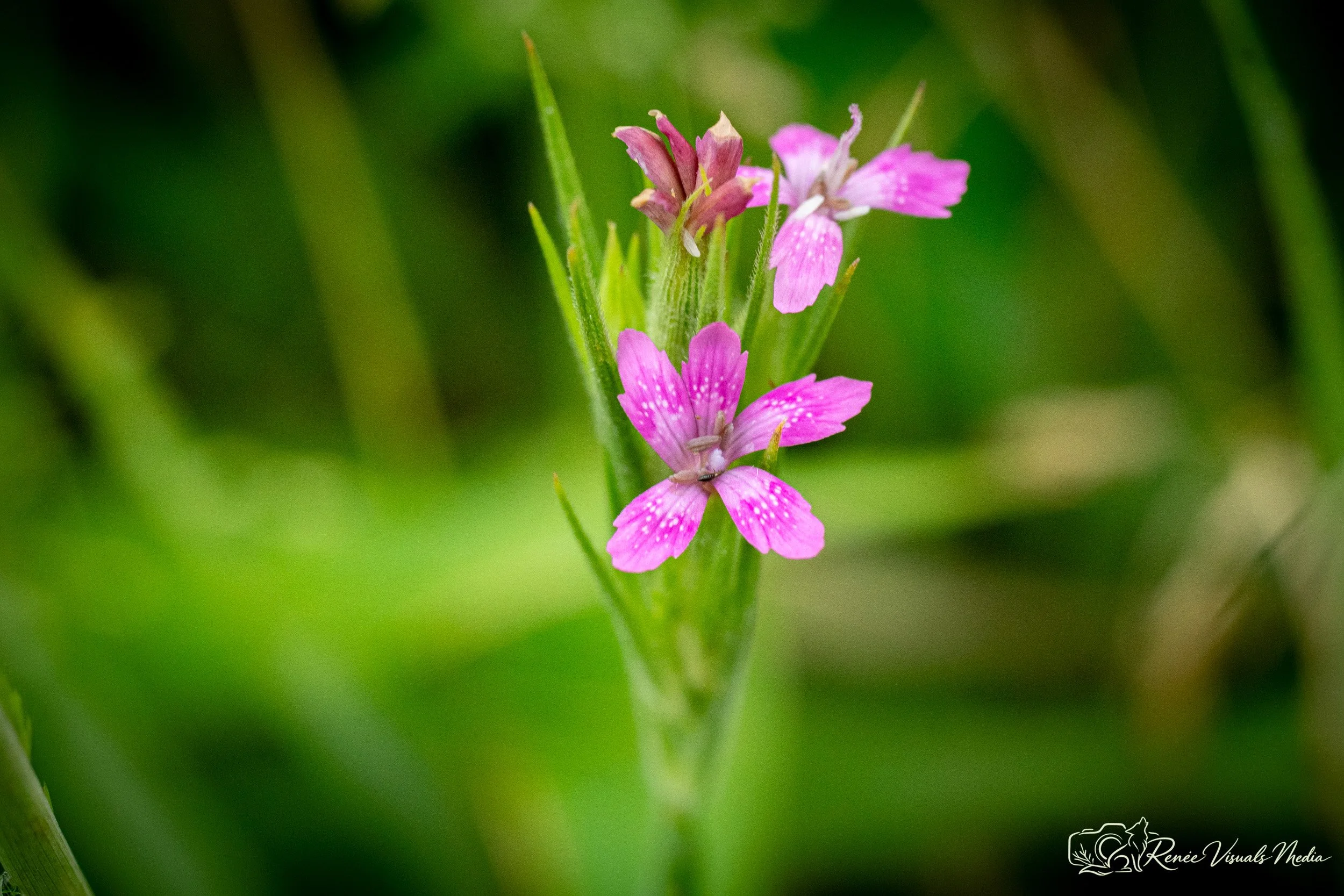
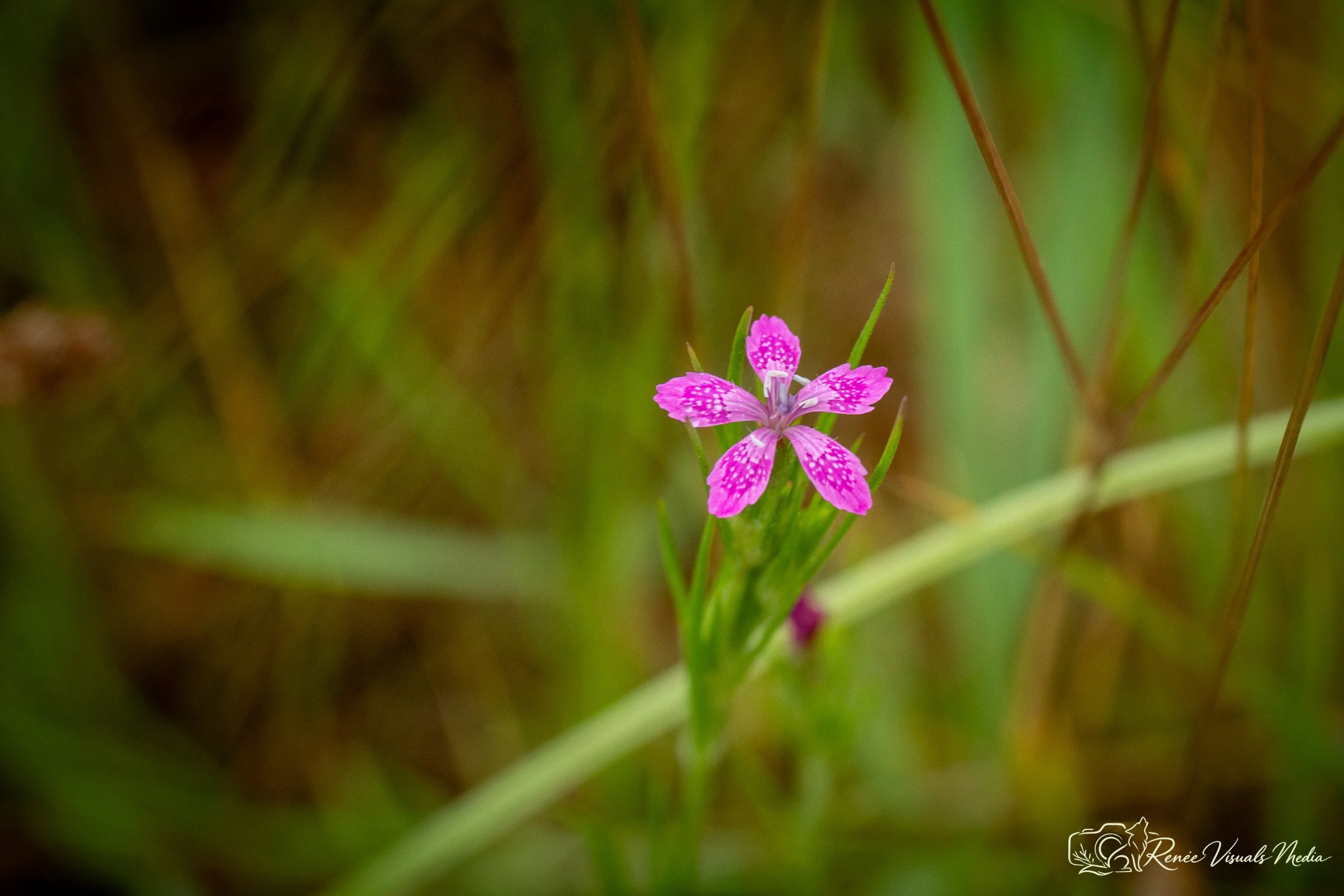
Despite looking like something that escaped from somebody’s cottage garden, Deptford Pink is a small wildflower in the carnation family, Caryophyllaceae. The flowers are tiny but ridiculously detailed: five bright pink to reddish petals, usually covered in pale white spots, with slightly fringed edges. The plant itself is much less dramatic, growing on thin, upright stems with narrow opposite leaves.
Deptford Pink is native to Europe, not North America, but it has become naturalized across much of the continent and is documented throughout New England. Around here, it tends to show up in sunny, open places like fields, roadsides, meadows, and other disturbed areas, which is probably why it can be incredibly easy to walk directly past until one tiny neon-pink flower decides to demand your attention.
It grows as an annual or biennial, meaning an individual plant doesn’t stick around forever. Instead, it flowers, produces seed, and keeps the population going through the next generation. The flowers themselves usually occur in small clusters rather than forming the big, obvious floral displays people tend to notice from twenty feet away.
A few easy ID clues:
• Small bright pink flowers with white speckling
• Five petals with slightly fringed or jagged-looking tips
• Very narrow leaves arranged opposite each other on the stem
• Thin, stiff, upright stems
• Usually found in sunny open or disturbed habitat
One useful distinction with plants like this is that nonnative does not automatically mean invasive. Deptford Pink was introduced from Europe and now reproduces on its own here, making it naturalized. Whether a nonnative species is considered invasive depends more on whether it spreads aggressively and causes ecological harm, rather than simply whether it originated somewhere else.
So while Deptford Pink may technically be an immigrant in the New England flora, I am personally willing to forgive it for being approximately the size of a pencil eraser and dressing like it has somewhere important to be. 🌸
