The Great Horned Owl
Bubo virginianus
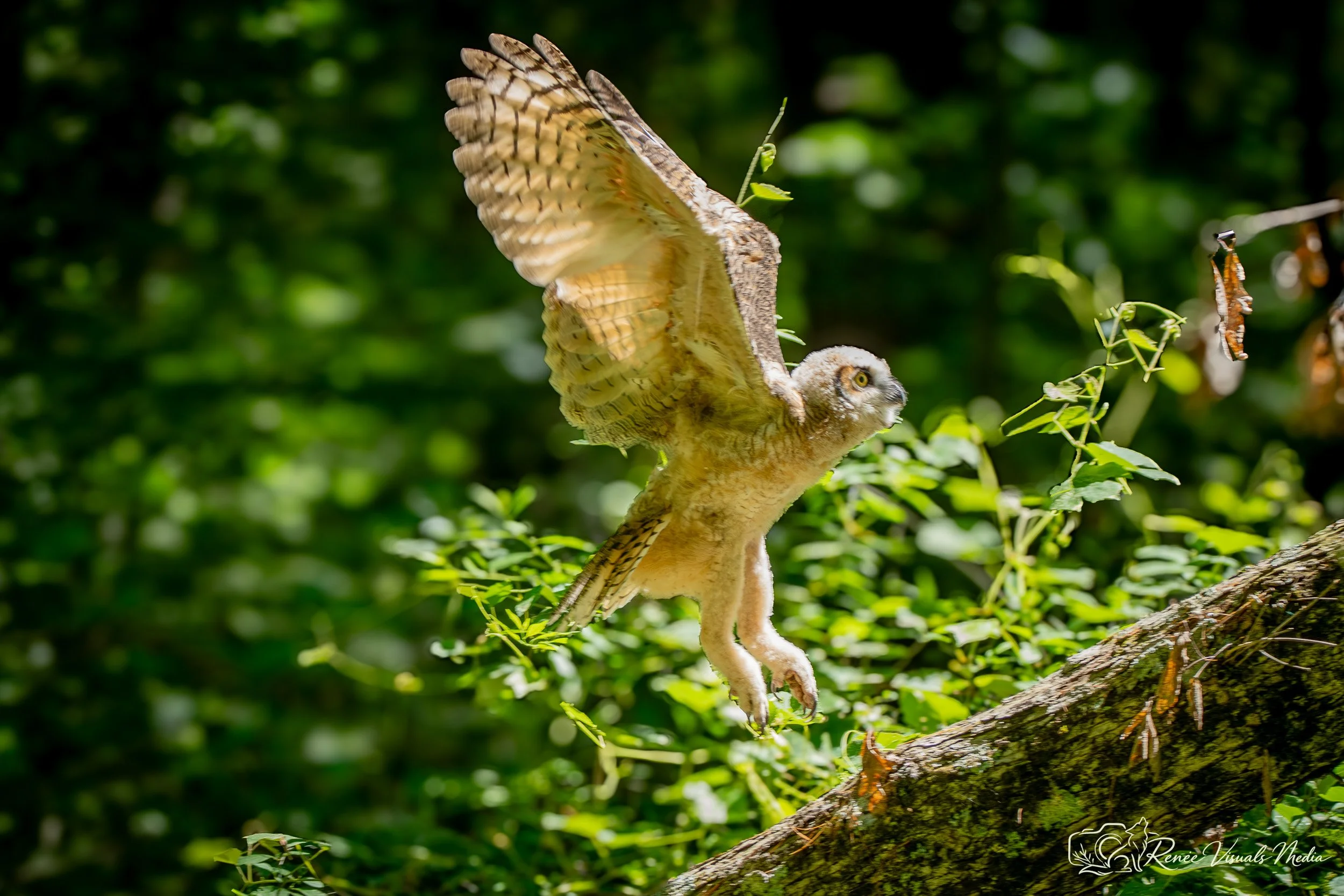
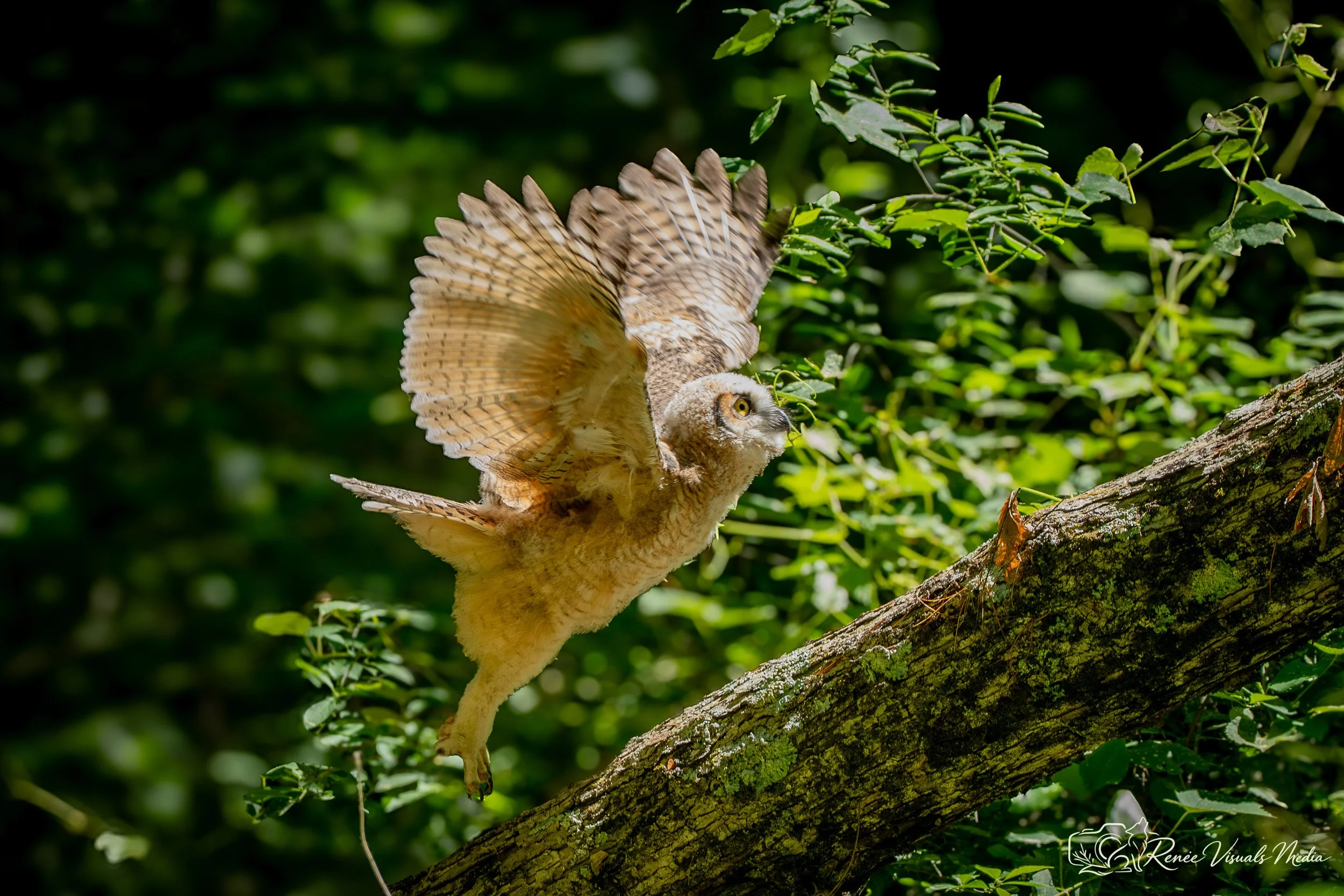
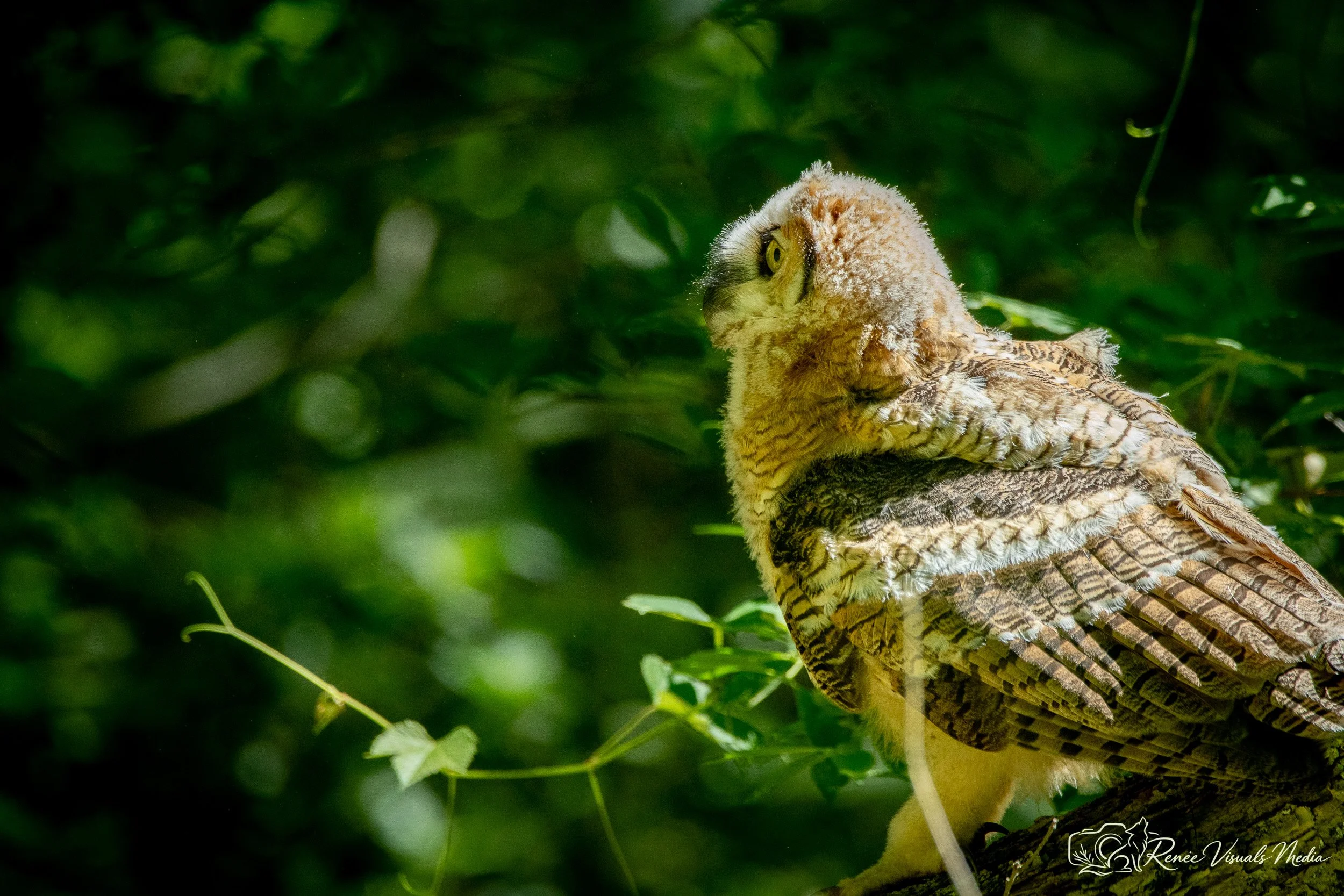
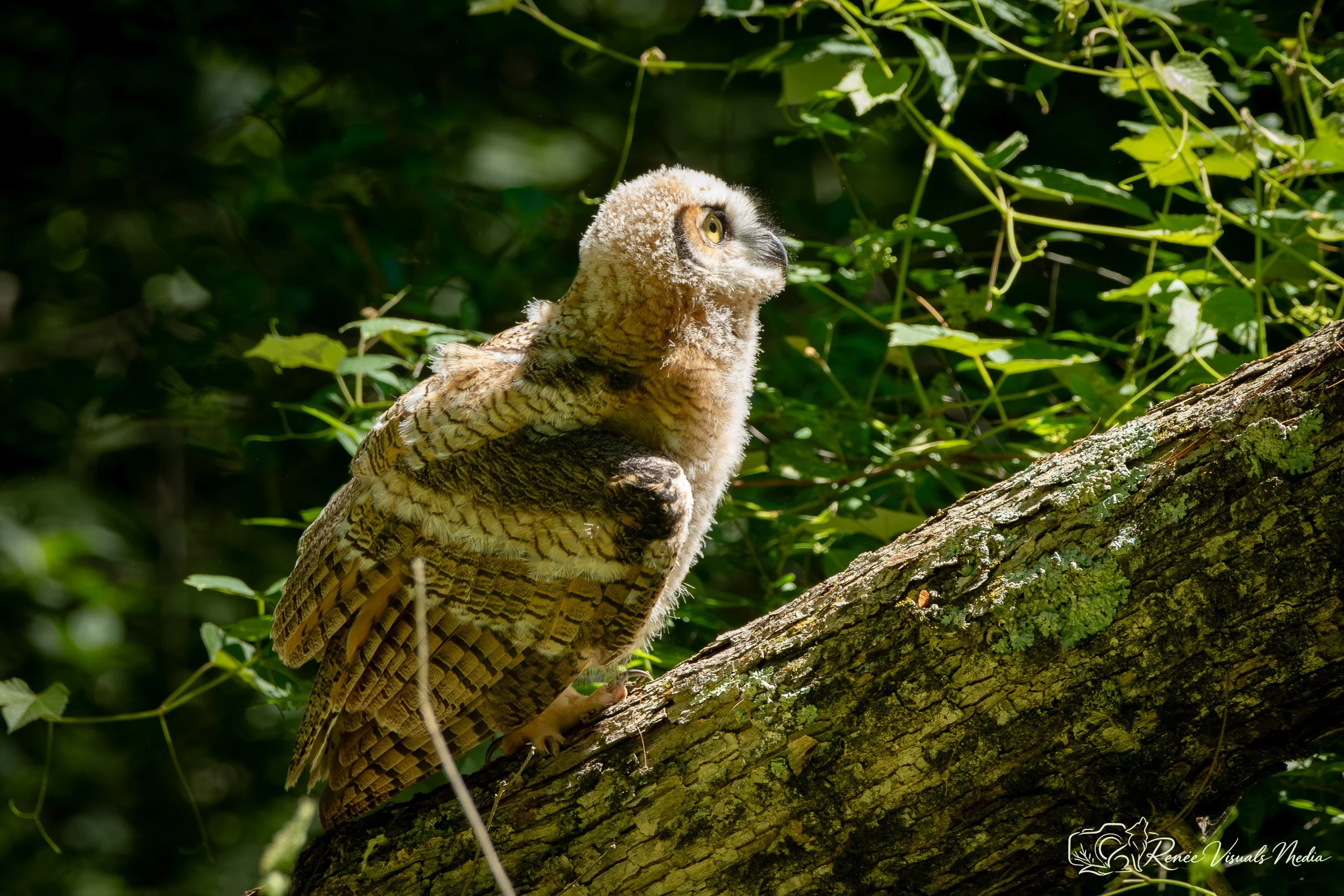
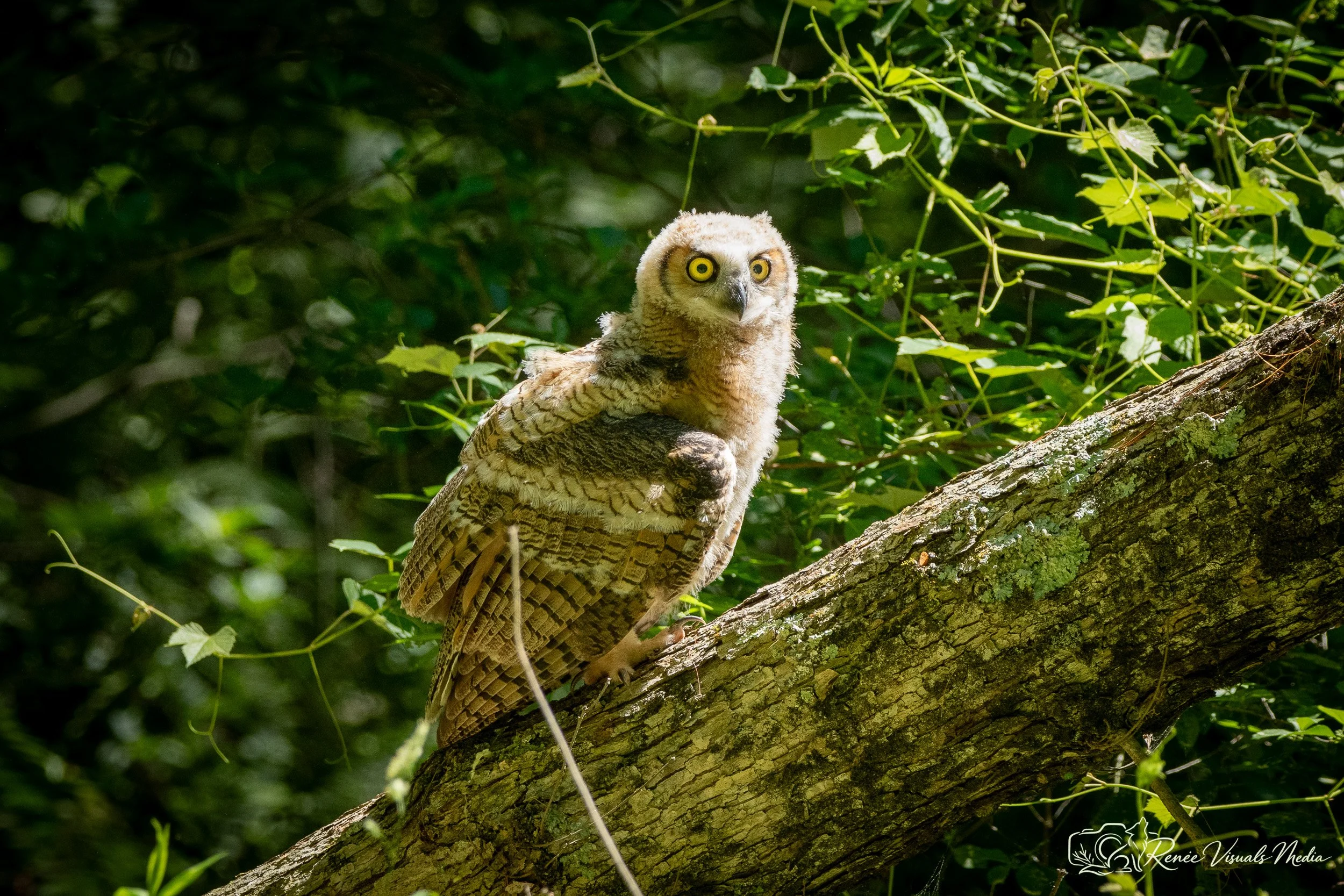
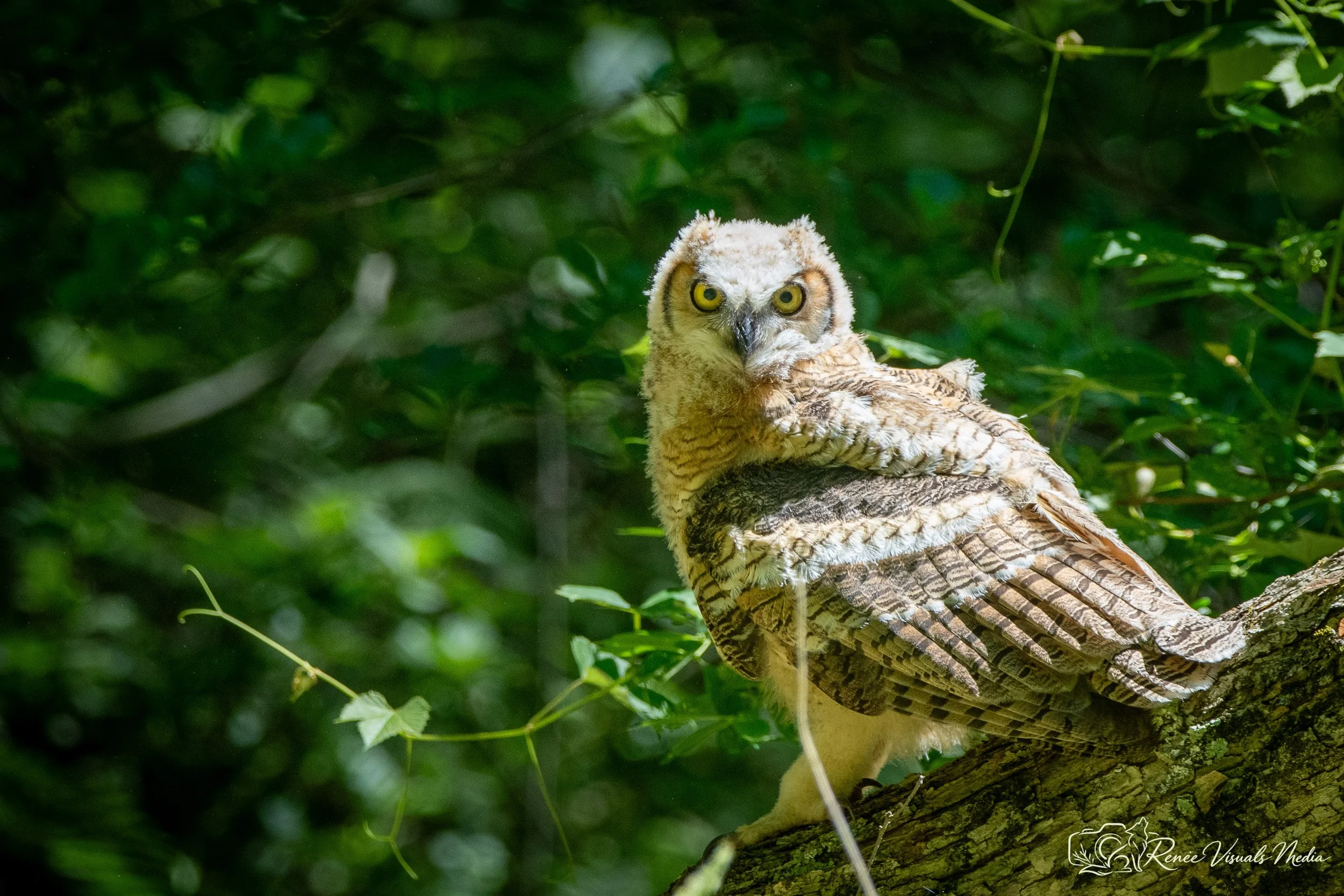
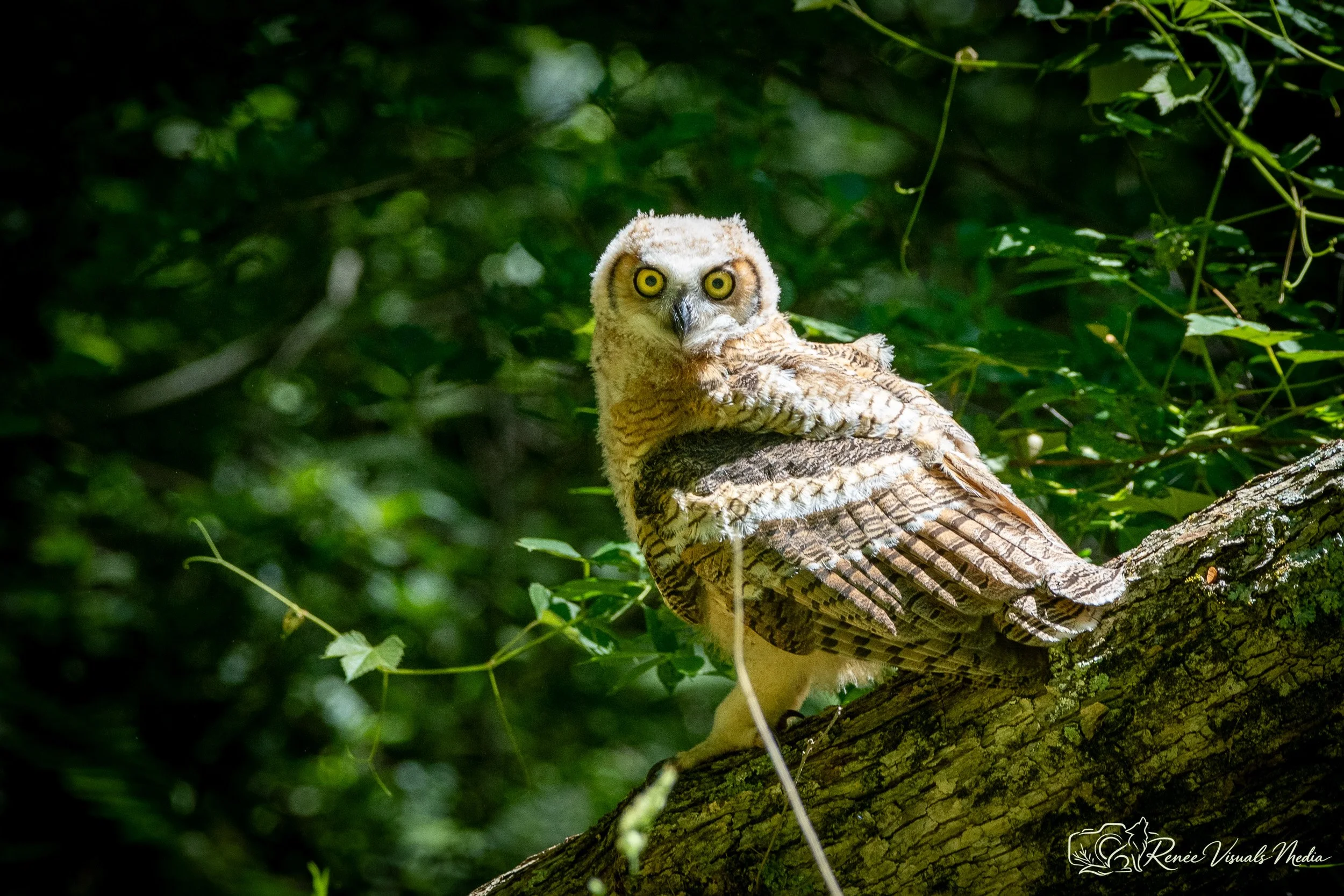
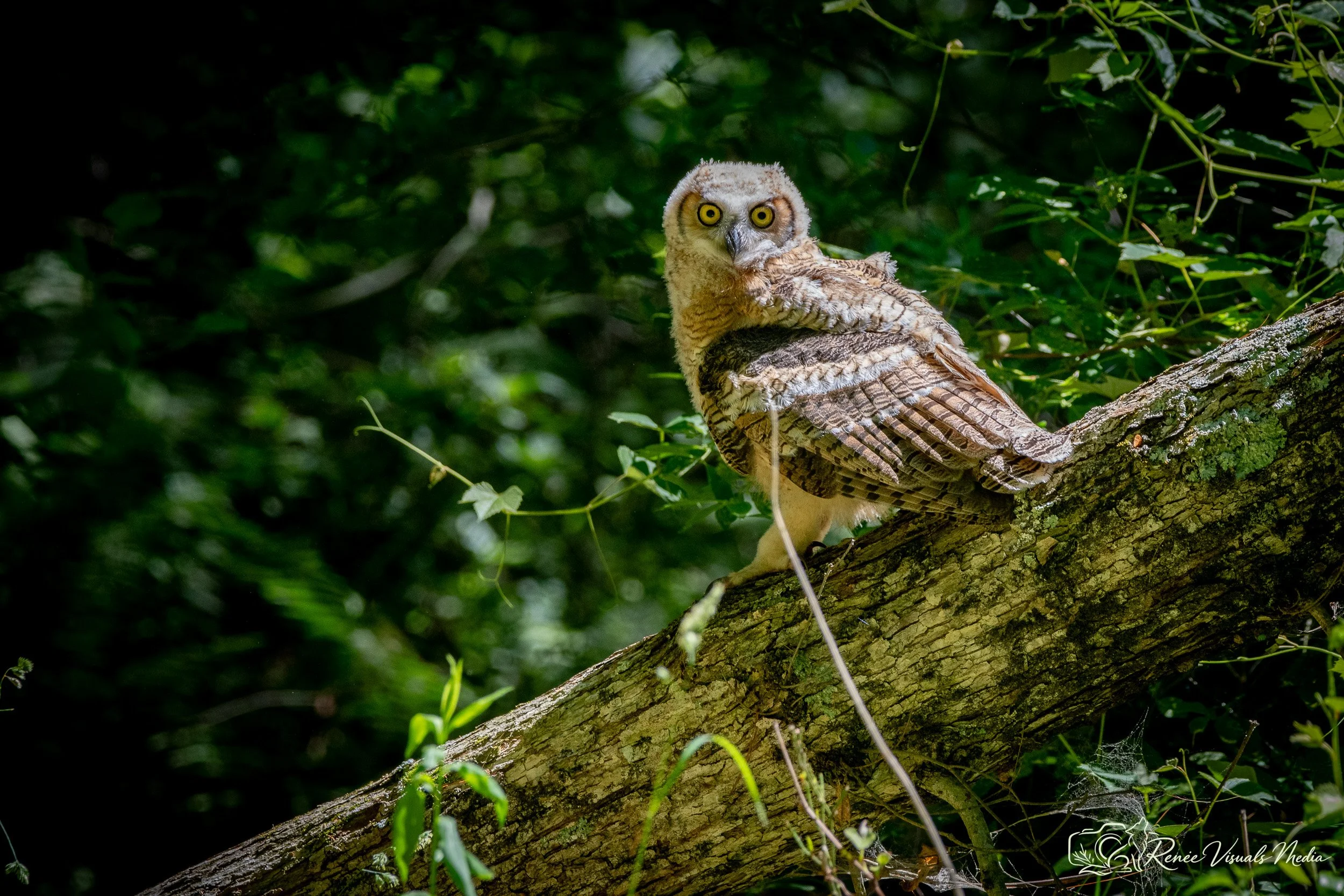
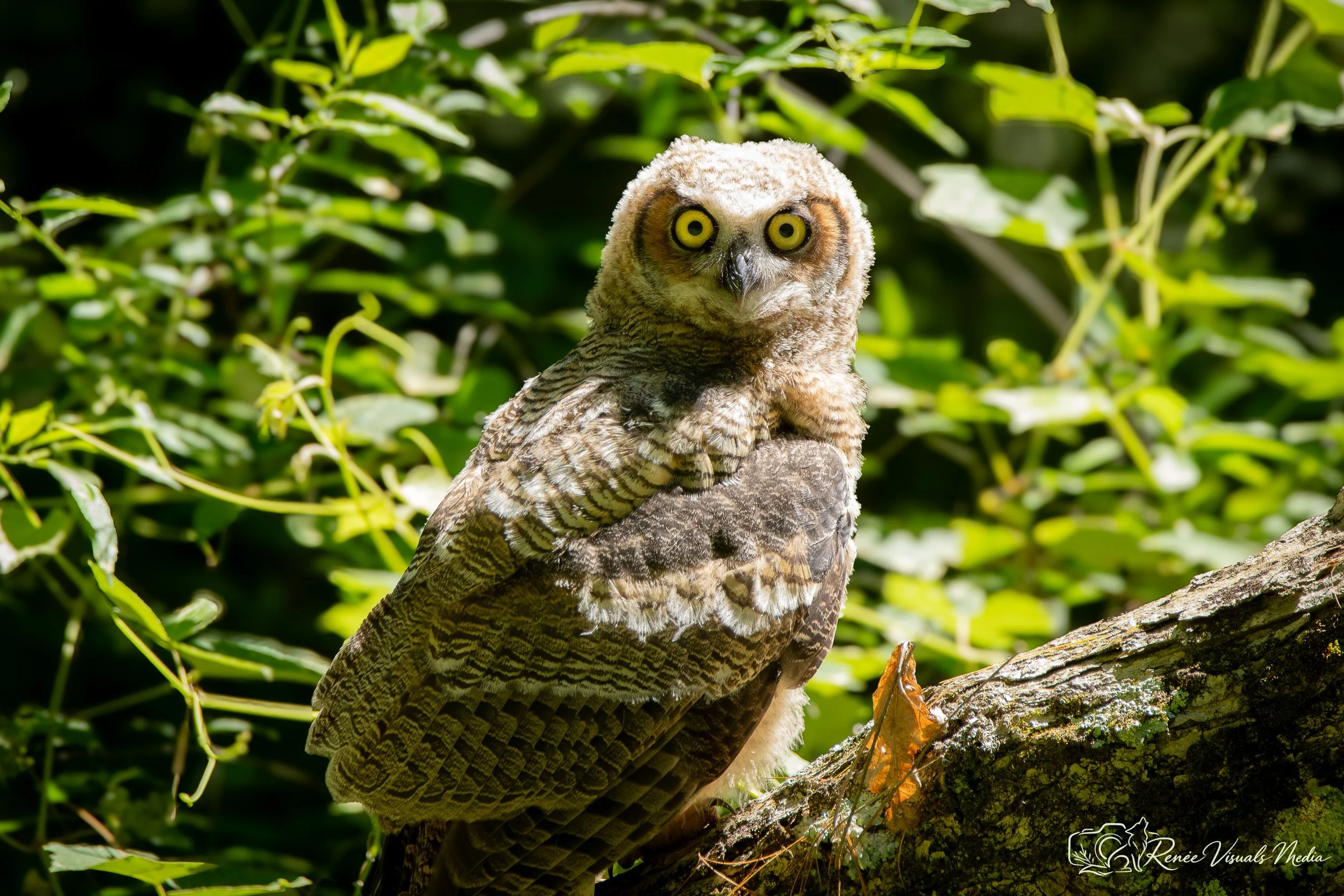
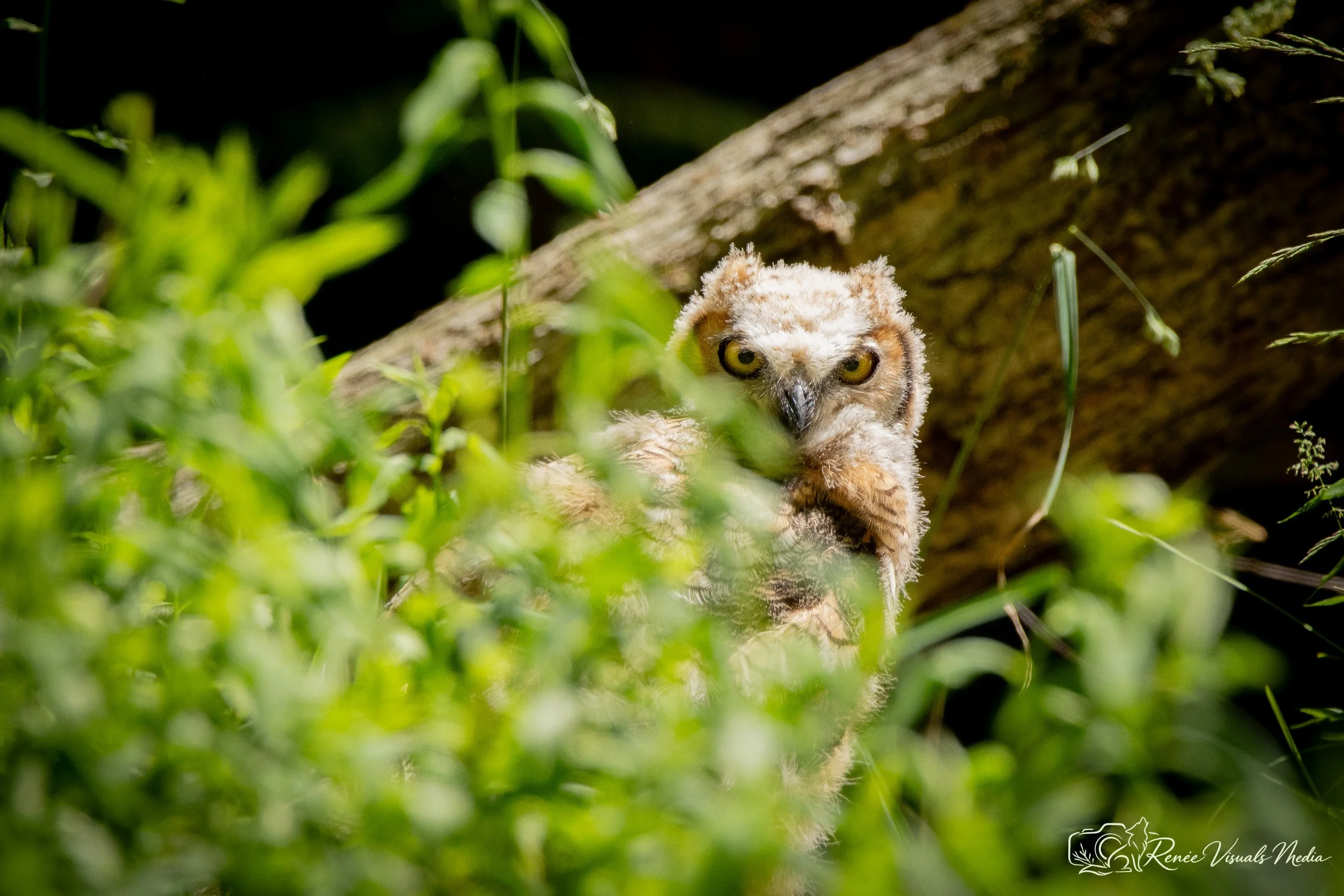
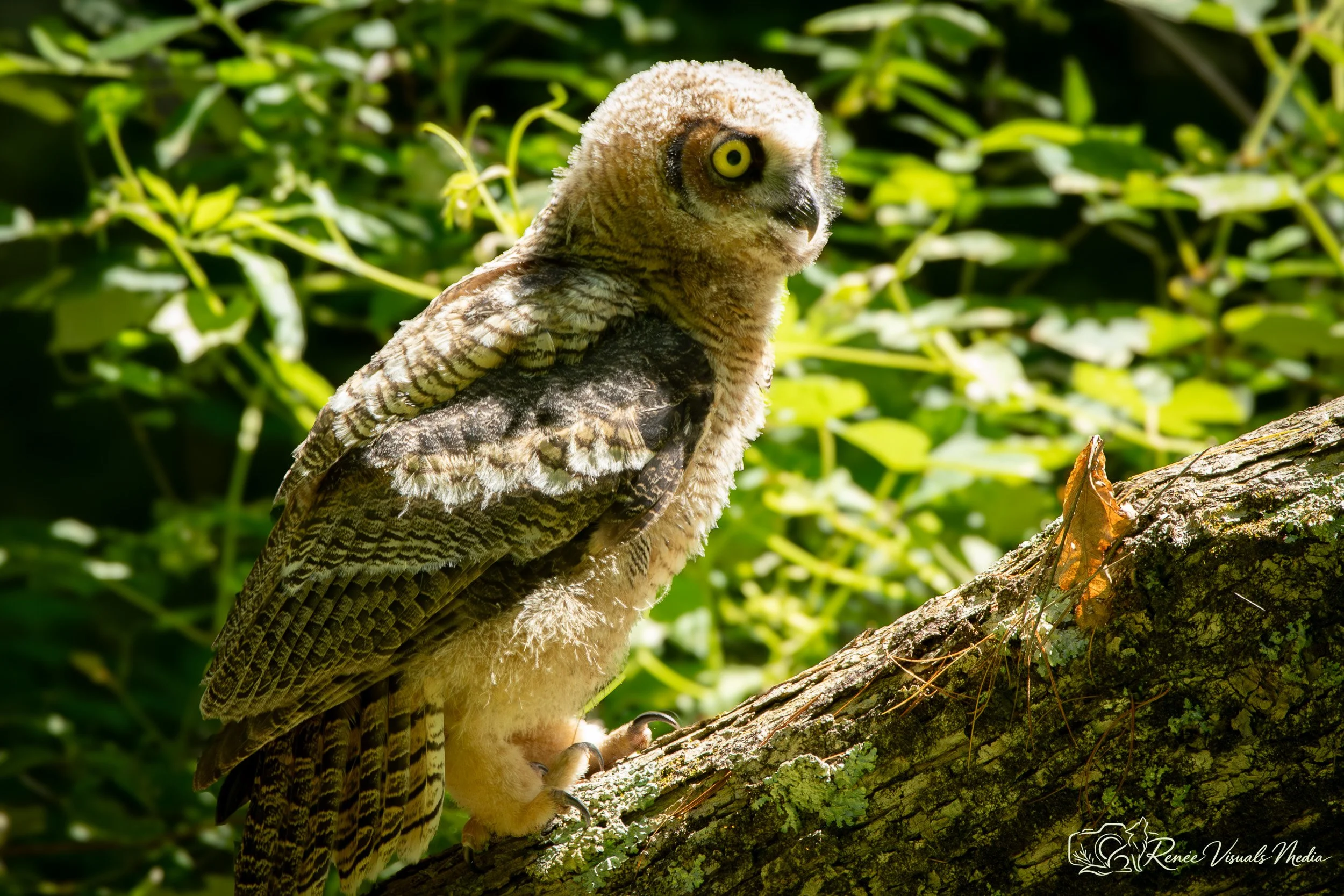
One of the coolest wildlife encounters I’ve had in a long time!
These two youngsters are juvenile Great Horned Owls in their “branching” phase, a stage between leaving the nest and becoming fully independent. During this period, fledglings spend weeks hopping, climbing, exploring, and practicing short flights while they learn the skills they’ll need to survive on their own. Their fluffy down feathers, oversized feet, and fuzzy little muppet heads are all signs of owl adolescence.
I identified them as Great Horned Owls by the developing feather tufts on top of their heads. Despite looking independent, Mom and Dad are almost certainly nearby, continuing to feed and supervise them while they figure out how to be owls.
As apex predators, Great Horned Owls play an important role in maintaining healthy ecosystems by controlling populations of rodents, rabbits, skunks, and other small mammals.
If you’re lucky enough to encounter fledgling owls, give them space. Young owls often spend time on the ground, fallen logs, and low branches while learning to fly. Unless they are visibly injured, the best thing you can do is observe from a distance and let their parents continue caring for them.
While attacks on pets are rare, adult Great Horned Owls are powerful hunters capable of taking prey as large as skunks. Small pets should always be supervised outdoors, especially at dawn, dusk, and nighttime.
One of the greatest threats to owls and other raptors is secondary poisoning. When rodents consume poison and are later eaten by predators, the toxin moves up the food chain. Please avoid rodent poisons and glue traps whenever possible. Instead, consider snap traps, exclusion methods, or live-capture traps where appropriate.
These fuzzy little owl teenagers were an incredible reminder that wildlife is all around us. Good luck, little muppets.
