Southern Catalpa
Catalpa bignonioides
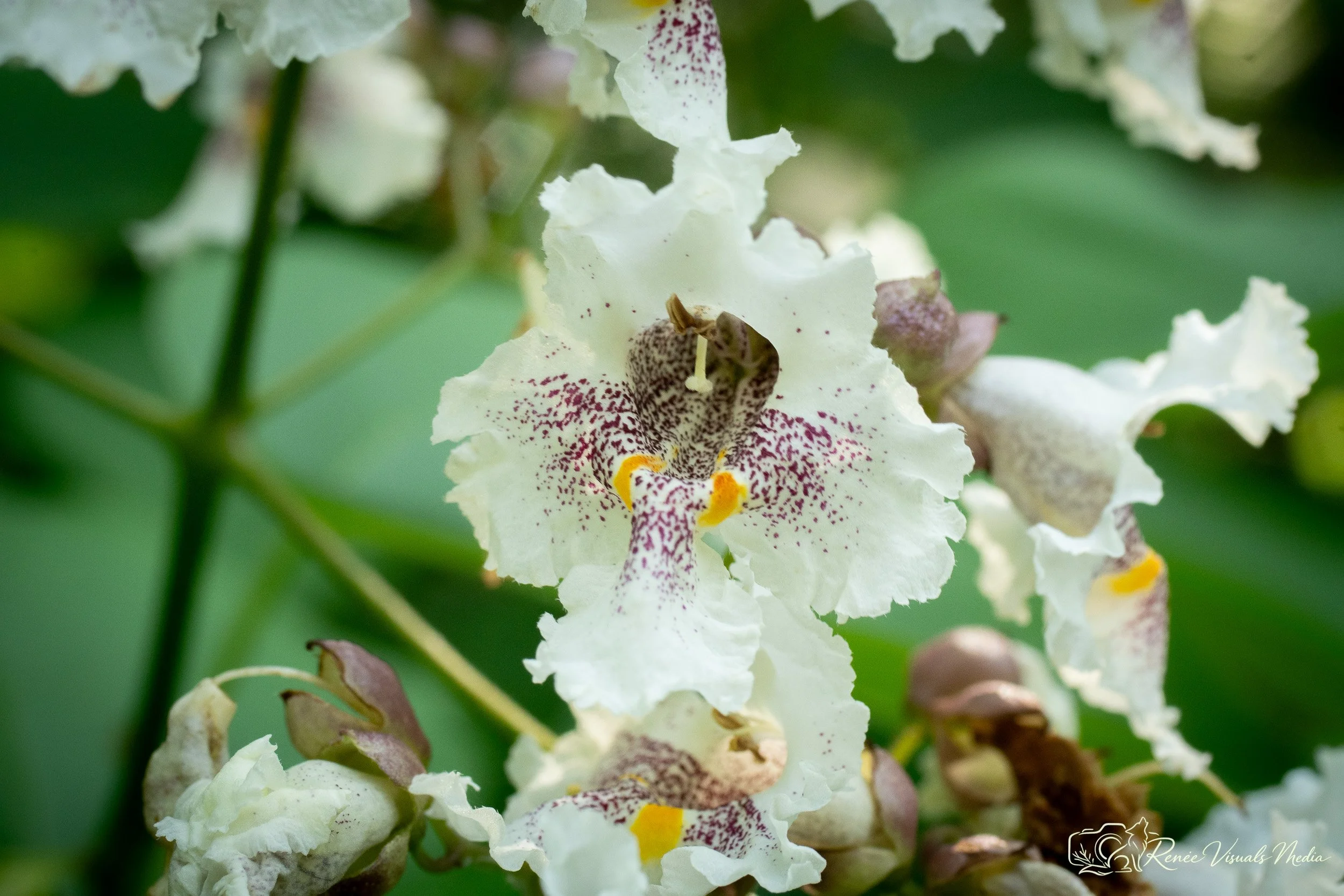
Southern Catalpa is one of those trees that looks like it was designed by somebody who kept asking, “Okay, but what if we made it bigger?”
The leaves are enormous, broad, heart-shaped, and often around 10 inches long. The flowers are equally dramatic: white, bell-shaped blooms covered in dense purple spotting with bright yellow markings inside. Later in the season, those flowers turn into long, narrow seed pods that can reach around 15 inches and hang from the branches like somebody decorated the tree with green beans.
Southern Catalpa is a deciduous tree in the trumpetvine family, Bignoniaceae. It is native to the southeastern United States, but it has been widely planted outside its native range and can persist or escape from cultivation. It grows quickly, tolerates a surprisingly wide range of soil conditions, and tends to develop a broad, irregular crown rather than a perfectly tidy ornamental shape.
A few easy ID clues:
• Huge heart-shaped leaves
• White trumpet-shaped flowers
• Dense purple speckling and yellow markings inside the blooms
• Long, skinny seed pods later in the season
• Broad, somewhat crooked or irregular growth form
Southern Catalpa can look extremely similar to Northern Catalpa, Catalpa speciosa. One useful difference is in the flowers: Southern Catalpa tends to have denser purple spotting, while Northern Catalpa is usually more sparsely marked. Southern Catalpa leaves also have an unpleasant odor when crushed, which is perhaps the plant equivalent of being gorgeous and then immediately ruining the mood.
It is also a host plant for catalpa sphinx moth caterpillars, meaning those ridiculous dinner-plate leaves are not just decorative real estate. They also feed native insects that, in turn, become food for birds and bats.
I unfortunately only photographed the flower because apparently Past Me saw giant leaves the size of a serving platter and foot-long bean pods and went, “Nah, the close-up is probably enough.”
It was not enough. I have regrets. 🌳💀
